
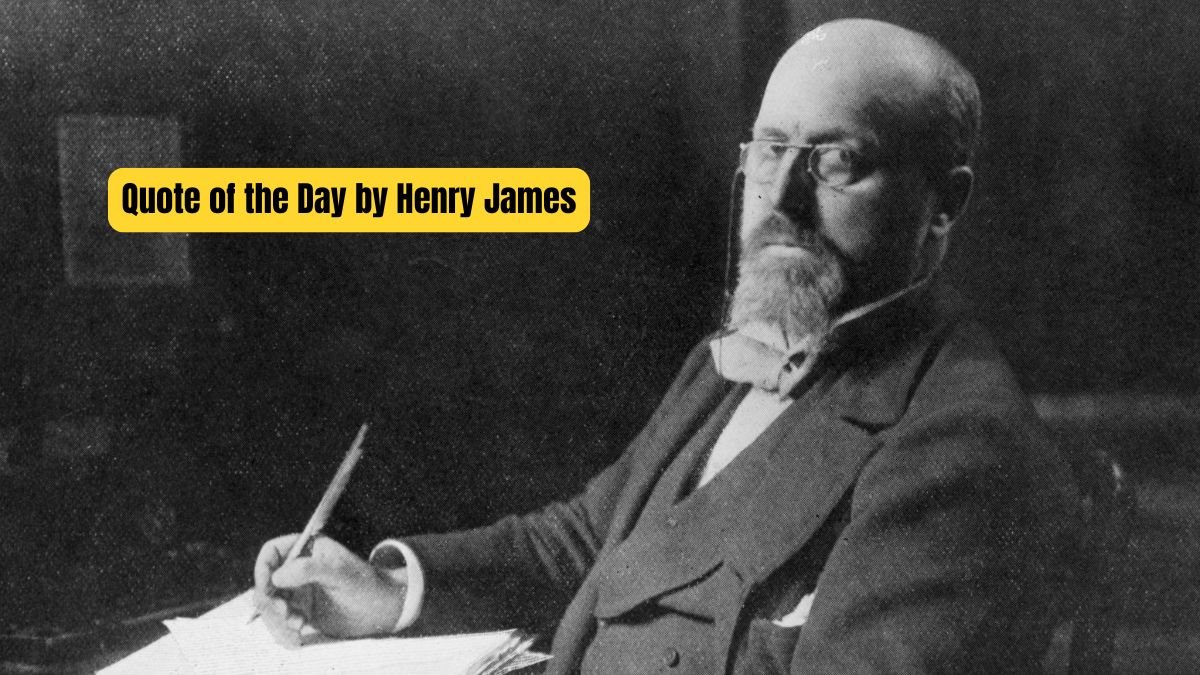
Henry James is widely regarded as one of the most influential writers of the late 19th and early 20th centuries. Celebrated for shaping the modern novel, he is especially known for his deep exploration of human psychology, moral complexity, and social dynamics.
Born in New York City in 1843, James grew up in an intellectually vibrant family. His father, Henry James Sr., was a respected thinker, while his brother, William James, became a leading figure in philosophy and psychology. This environment strongly influenced James’s early thinking.
Rather than following a traditional academic path, he was educated through private tutoring and extensive travel across Europe. These experiences exposed him to diverse cultures, languages, and artistic traditions. His transatlantic upbringing later became central to his writing, particularly in the “international theme,” which contrasts American simplicity with European refinement.
Major Works And Literary Focus
James began his career writing short stories and critical essays, but he soon rose to prominence as a novelist. Some of his most notable works include:
- The Portrait of a Lady (1881)
- The Wings of the Dove (1902)
- The Ambassadors (1903)
- The Golden Bowl (1904)
These novels are admired for their layered storytelling, nuanced characters, and ethical dilemmas. Rather than relying on action-driven plots, James concentrated on the internal worlds of his characters—their emotions, thoughts, and personal conflicts.
Style And Literary Contributions
One of James’s most significant contributions to literature was his development of psychological realism, closely linked to what later became known as the stream-of-consciousness technique. He was deeply interested in perception—how individuals interpret reality and how their inner thoughts shape their decisions.
His writing style, particularly in his later works, is known for its complexity. Long, carefully structured sentences and subtle meanings characterize his prose. While this style can be challenging, it reflects his commitment to portraying the intricacies of human experience.
Beyond fiction, James also made important contributions to literary theory. In essays such as The Art of Fiction, he argued that novels should be treated as serious artistic expressions capable of exploring truth and life as profoundly as philosophy or poetry. He rejected rigid rules, encouraging writers to depict life authentically.
Later Life And Legacy
James spent much of his adult life in Europe and eventually settled in England. In 1915, during World War I, he became a British citizen as a gesture of loyalty to his adopted country. He passed away in 1916, leaving behind an extensive and influential body of work.
His legacy is immense. He helped transform the novel into a medium for deep psychological and moral inquiry, influencing later modernist writers like Virginia Woolf and James Joyce. His emphasis on perspective, ambiguity, and inner experience continues to shape literature and criticism today.
James was more than a storyteller—he was a keen observer of human nature, encouraging readers to look beyond surface appearances and engage with deeper emotional and intellectual realities.
Quote Of The Day: The Power Of Kindness
One of Henry James’s most memorable reflections is:
“Three things in human life are important: the first is to be kind; the second is to be kind; and the third is to be kind.”
This repetition is intentional and meaningful. It emphasizes that kindness is not secondary to success, intelligence, or ambition—it is fundamental.
The first “to be kind” highlights conscious choice. It encourages us to act with understanding and compassion, recognizing that others carry unseen struggles.
The second repetition reinforces that kindness is not always easy. It often requires patience, restraint, and emotional strength, especially during difficult moments.
The third repetition elevates kindness into a guiding principle of life. It suggests that kindness should not depend on circumstances or recognition but should remain constant and genuine.
On a deeper level, this message reflects a universal truth. Life can be uncertain and complex, yet kindness offers clarity. It bridges differences across cultures and backgrounds, fostering connection and trust.
Even small acts—listening, offering support, or showing empathy—can create lasting impact. In practicing kindness, we not only improve others’ lives but also cultivate inner peace and fulfillment.
Henry James redefined the possibilities of fiction by bringing psychological depth and moral reflection to the forefront of storytelling. His works continue to inspire readers to explore the complexities of human thought and emotion. At the same time, his reflections on kindness remind us that, despite life’s challenges, compassion remains one of the most powerful and enduring human values.