
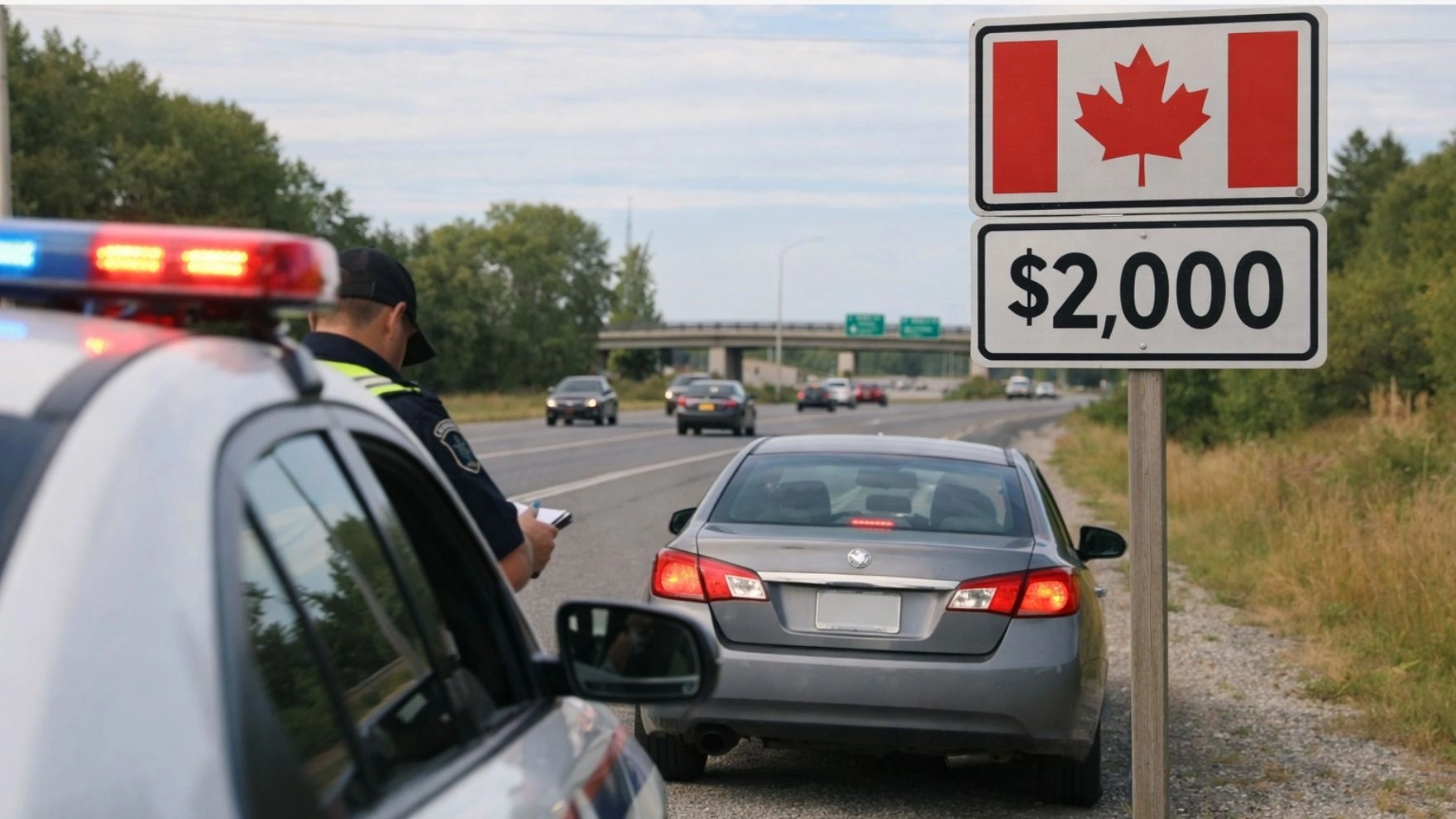
Beginning in February 2026, Canada will implement stricter driving regulations, introducing higher penalties for traffic violations across the country. Under the new framework, fines for certain offences may climb to as much as $2,000 nationwide. These updated Canada driving rules aim to improve road safety, deter dangerous behaviour, and create a more consistent enforcement structure from province to province.
The tightening of Canada driving rules in February 2026 reflects growing concerns about distracted driving, impaired operation of vehicles, excessive speeding, and repeat traffic violations. Authorities believe that increasing penalties to $2,000 for serious infractions will encourage compliance and reduce accident rates.
This comprehensive guide explains the new Canada driving rules effective February 2026, outlines the offences subject to higher fines, details enforcement measures, and offers practical advice for drivers navigating the updated legal landscape.
Why Canada is tightening driving rules in February 2026
Rising road safety concerns
In recent years, traffic authorities have reported increases in collisions linked to distracted driving, speeding, and impaired driving. The decision to introduce stricter Canada driving rules in February 2026 comes as part of a broader national road safety strategy.
Key objectives include:
Reducing traffic-related fatalities
Deterring reckless driving behaviour
Strengthening penalties for repeat offenders
Encouraging responsible vehicle operation
By raising fines up to $2,000 nationwide, policymakers hope to reinforce the seriousness of traffic offences.
Harmonizing penalties nationwide
Although traffic laws are largely enforced at the provincial level, there has been a push to align penalty ranges more closely across jurisdictions. The updated Canada driving rules for February 2026 create greater consistency in maximum fines for major offences.
This harmonization ensures that similar violations carry comparable consequences regardless of location within Canada.
Key changes under the new Canada driving rules
Increased maximum fines
One of the most significant updates is the increase in financial penalties. For certain serious violations, fines may reach up to $2,000 nationwide.
Offences potentially subject to higher fines include:
Excessive speeding
Dangerous driving
Distracted driving
Driving without valid insurance
Repeat impaired driving violations
The exact fine amount will depend on the nature of the offence and whether it is a first-time or repeat violation.
Stronger penalties for repeat offenders
Repeat offenders may face escalating fines, additional demerit points, licence suspensions, or mandatory driving education programs.
The tightened Canada driving rules from February 2026 emphasize accountability and progressive discipline.
Enhanced enforcement tools
Authorities are also expanding enforcement capabilities through:
Increased roadside checks
Automated speed enforcement systems
Red-light cameras
Digital monitoring technologies
These measures aim to ensure consistent application of the new penalties.
Table: Overview of updated Canada driving penalties February 2026
| Violation Type | Previous Maximum Fine | New Maximum Fine (Feb 2026) |
|---|---|---|
| Excessive speeding | Lower provincial limits | Up to $2,000 |
| Distracted driving | Moderate fines | Increased, up to $2,000 |
| Dangerous driving | Variable penalties | Higher national cap |
| Repeat offences | Escalating penalties | Sharper financial consequences |
| Insurance violations | Regional differences | Standardized higher fines |
This table summarizes how Canada driving rules tighten February 2026, with fines rising to $2,000 nationwide for serious violations.
Impact on drivers across Canada
Financial consequences
Higher fines mean that even a single serious traffic violation can significantly impact personal finances. A $2,000 penalty may also be accompanied by increased insurance premiums.
Drivers should consider the long-term cost implications of traffic infractions under the new Canada driving rules.
Insurance rate increases
Traffic violations often result in higher insurance premiums. With fines up to $2,000 nationwide beginning February 2026, insurers may adjust risk assessments accordingly.
Maintaining a clean driving record becomes even more important under stricter rules.
Demerit points and licence suspension
In addition to financial penalties, many offences carry demerit points. Accumulating too many points may lead to licence suspension.
The updated Canada driving rules February 2026 reinforce the link between financial penalties and driving privileges.
Distracted driving under the new rules
Heightened focus on mobile device use
Distracted driving remains a major cause of accidents. The tightened Canada driving laws from February 2026 place particular emphasis on mobile phone use while driving.
Penalties may include:
Fines approaching $2,000
Demerit points
Short-term licence suspension
Zero tolerance in certain zones
School zones and construction zones may carry enhanced penalties. Drivers should exercise extra caution in these areas.
Speeding and aggressive driving penalties
Excessive speeding
Speeding well above posted limits will likely attract the highest fines under the new structure. Excessive speeding is often associated with severe accidents.
Street racing and stunt driving
Authorities continue to target street racing and stunt driving. Under the updated Canada driving rules effective February 2026, these behaviours may result in substantial fines and vehicle impoundment.
Impaired driving penalties in 2026
Alcohol and drug impairment
Impaired driving remains a serious offence. Fines, criminal charges, and licence suspensions may accompany violations.
The new Canada driving rules reinforce strict consequences for operating a vehicle under the influence.
Repeat violations
Repeat impaired driving offences may trigger maximum penalties under the updated framework, including fines up to $2,000 nationwide and extended suspensions.
How drivers can prepare for stricter rules
Stay informed
Drivers should review official updates from provincial transportation authorities to understand specific enforcement details.
Practice defensive driving
Defensive driving techniques reduce the risk of accidents and violations. Maintaining awareness, following speed limits, and avoiding distractions are essential.
Monitor insurance policies
Understanding how traffic violations affect insurance rates helps drivers make informed decisions.
Long-term goals of the updated driving rules
Safer roads nationwide
By increasing penalties and standardizing enforcement, Canada aims to reduce traffic injuries and fatalities.
Cultural shift toward responsibility
Stricter Canada driving rules February 2026 encourage a cultural shift toward greater responsibility behind the wheel.
Sustainable enforcement model
Higher fines and improved monitoring systems provide funding and support for continued road safety initiatives.
Conclusion
Canada driving rules tighten February 2026, with fines reaching up to $2,000 nationwide for serious traffic violations. These changes reflect a national commitment to improving road safety, reducing dangerous behaviour, and harmonizing penalties across provinces.
For drivers, understanding the updated regulations is essential. Higher financial penalties, potential licence suspensions, and insurance impacts make compliance more important than ever. By staying informed and adopting safe driving habits, motorists can avoid costly consequences and contribute to safer roads across Canada.
FAQs on Canada Driving Rules February 2026
What is the maximum fine under the new Canada driving rules in 2026?
Under the updated rules starting February 2026, certain serious traffic violations can result in fines of up to $2,000 across Canada.
Which offences are most likely to receive higher penalties?
Excessive speeding, distracted driving, dangerous driving, repeat violations, and driving without proper insurance may face the highest fines under the new regulations.
Will the new driving rules apply across all provinces?
Yes, while provinces enforce their own traffic laws, the updated framework encourages nationwide consistency in higher penalties and stricter enforcement beginning February 2026.