Quote of the Day by Andrew Carnegie: “No one becomes truly wealthy unless…”
3 min de lecture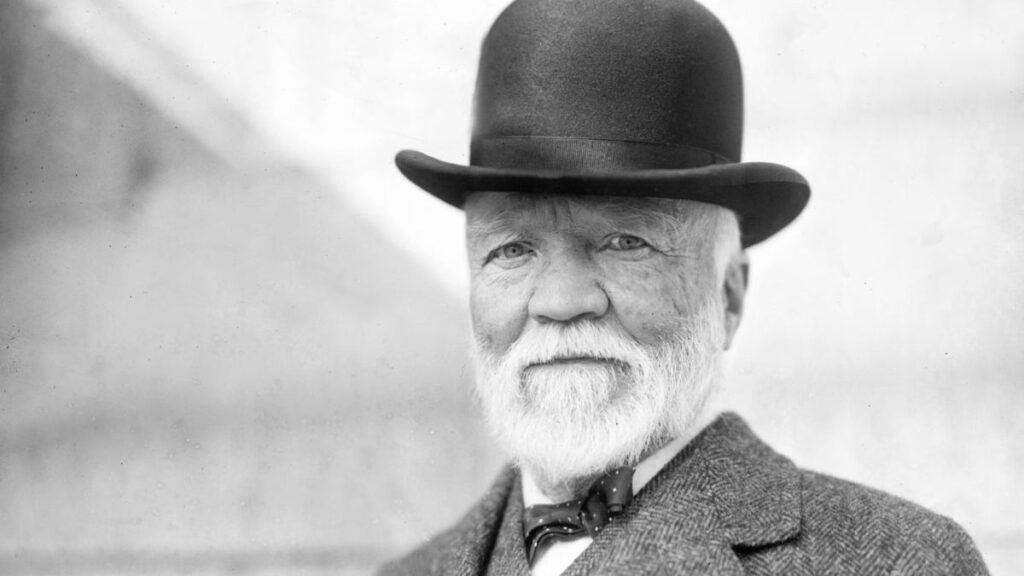
Andrew Carnegie was born in Dunfermline, Scotland, in 1835. Facing economic struggles in the weaving industry, his family moved to Allegheny, Pennsylvania, in 1848. Starting work at a young age, Carnegie educated himself through reading and night classes, gradually advancing through the telegraph and railroad industries.
His ambition and business acumen eventually led him to build Carnegie Steel into one of the most dominant industrial companies of the late 19th century. In 1901, he sold the company to J. P. Morgan, marking a turning point in his life as he shifted his focus entirely toward philanthropy. Through libraries, universities, and research institutions, Carnegie aimed to promote what he believed was the duty of wealth: improving society.
The Core Idea Behind His Famous Quote
“No man becomes rich unless he enriches others.”
Although widely quoted, the closest verified version comes from a Carnegie Corporation record of remarks he made in 1895: “No man can become rich without himself enriching others.” The modern phrasing is likely a simplified adaptation.
At its essence, this idea suggests that wealth is not created in isolation. Businesses succeed because they provide value—whether by solving problems, creating jobs, or delivering services people need. Carnegie challenges the belief that success is purely individual, highlighting instead the interconnected systems of workers, customers, suppliers, and institutions that make prosperity possible.
A Lesson For Business And Leadership
Carnegie’s insight offers a practical takeaway: sustainable success is built on value creation. Profit is not just about extracting revenue but about improving lives—employees, customers, and communities alike.
His philosophy, later formalized in The Gospel of Wealth, emphasized that those who accumulate wealth have a responsibility to use it for the public good. This thinking anticipated modern ideas around stakeholder value long before they became mainstream.
Why This Message Still Matters Today
Carnegie’s perspective feels especially relevant in today’s business environment. Companies are increasingly judged not only by financial growth but also by fairness, impact, and trust.
Recent global insights, such as the Edelman Trust Barometer, indicate that while businesses remain relatively trusted, concerns about inequality and fairness continue to grow. This creates pressure for leaders to demonstrate that success benefits more than just shareholders.
In the era of rapid technological change—particularly with AI—trust has become even more critical. Studies like the PwC Global Workforce Hopes and Fears Survey show that many employees remain uncertain about leadership decisions and workplace transformations. Carnegie’s principle provides a simple test: does success uplift everyone involved, or only a select few?
A Second Quote That Completes The Philosophy
“The man who dies thus rich dies disgraced.”
This statement adds depth to Carnegie’s thinking. While the first quote explains how wealth is created—through benefiting others—this one defines its purpose. Wealth, in his view, should not be hoarded but actively used to contribute to society.
Together, these ideas form a complete philosophy of leadership:
- Build wealth by creating value for others
- Use that wealth responsibly to benefit society
Practical Ways To Apply Carnegie’s Thinking
- Review a revenue stream and assess whether it genuinely improves customers’ lives
- Introduce performance metrics that track both profit and stakeholder benefit
- Hold regular discussions about who benefits—or loses—from business decisions
- Share value through better employee opportunities, fair pricing, or improved services
- Invest in long-term initiatives such as education, training, or public resources
- Apply a simple test: if your success increases, who else is better off because of it?
A Complementary Insight
“The purpose of business is to create and keep a customer.” — Peter Drucker
This idea reinforces Carnegie’s philosophy. While Carnegie focuses on the moral dimension of wealth, Drucker highlights the operational foundation—serving customers. Together, they suggest that lasting success comes from delivering real, shared value.
Andrew Carnegie’s legacy extends far beyond industry. His belief that wealth should both originate from and contribute to the well-being of others remains deeply relevant. In a world where trust, fairness, and shared success are increasingly important, his philosophy offers a timeless framework: true prosperity is built through value creation and fulfilled through responsible stewardship.