Quote of the Day by Marcus Aurelius: “Start your morning by reflecting…”
4 min de lecture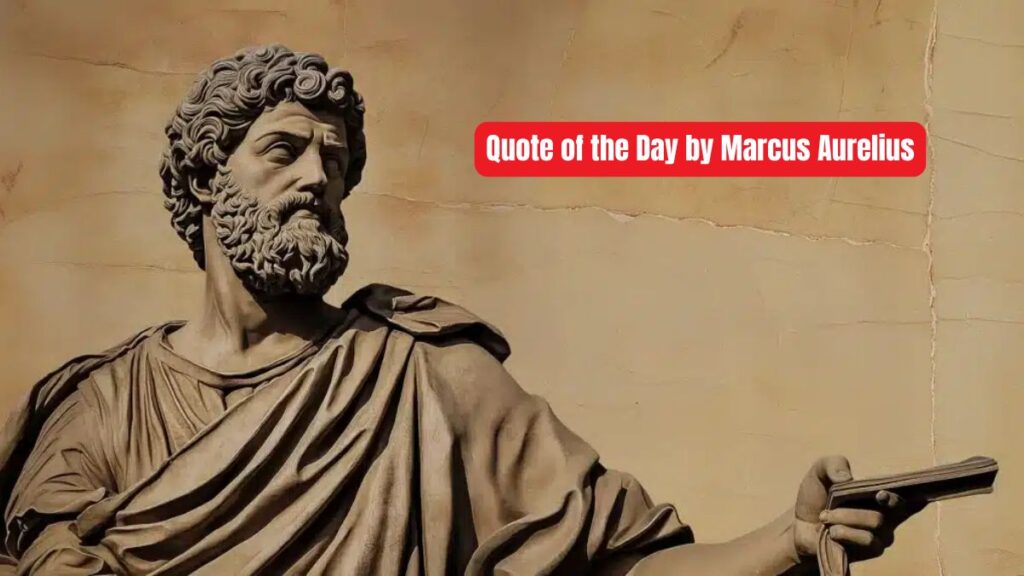
Marcus Aurelius remains one of the most fascinating figures in literary and political history. Known as the final ruler among Rome’s “Five Good Emperors,” he gained recognition not only for governance but also for his philosophical reflections that continue to influence modern thought.
Born in Rome in 121 CE into a wealthy and influential family, his birth name was Marcus Annius Verus. From an early age, he displayed seriousness and intellectual depth. His interest in philosophy—particularly Stoicism—developed early and later became central to his worldview.
His potential was noticed by Hadrian, who arranged for his inclusion in the imperial succession. Eventually, Antoninus Pius adopted him, securing his future as emperor and ensuring he received elite education in law, rhetoric, and philosophy.
Rule Of Rome Amid Challenges
Marcus Aurelius became emperor in 161 CE and initially shared power with his adoptive brother Lucius Verus. While joint rule was uncommon in Rome, their leadership proved effective.
However, his reign was marked by significant difficulties. He faced ongoing conflicts, particularly with Germanic tribes along Rome’s northern frontiers. At the same time, the devastating Antonine Plague swept through the empire, causing widespread death and economic strain.
Despite these hardships, Marcus remained committed to his responsibilities. Much of his rule was spent on military campaigns, often leading troops personally, while continuing to reflect deeply on philosophy.
Applying Stoicism In Everyday Life
Marcus Aurelius is best remembered as a follower of Stoicism, a school of thought that emphasizes reason, discipline, and acceptance of life’s uncertainties.
He believed philosophy should guide real-life actions, not remain theoretical. According to him, a virtuous life—defined by wisdom, justice, courage, and self-control—was the highest goal.
A central Stoic principle he embraced was focusing only on what lies within our control. External events—such as illness, loss, or criticism—cannot always be managed, but our reactions can. By mastering thoughts and emotions, individuals can achieve inner peace regardless of circumstances.
He also stressed humility and interconnectedness, believing that all people are part of a larger whole. This perspective shaped his leadership, as he prioritized the welfare of others over personal gain.
Meditations: A Timeless Personal Reflection
His most famous work, Meditations, was never intended for public release. It was a private journal where he recorded his thoughts, struggles, and insights.
In these writings, Marcus explored themes such as mortality, self-discipline, purpose, and ethical living. The tone is deeply introspective, often reminding himself to remain calm, avoid anger, and act justly.
What makes Meditations enduring is its honesty. Rather than presenting perfection, Marcus openly acknowledged his flaws and continuously sought self-improvement—making the work relatable even centuries later.
Leadership And Contributions
As a ruler, Marcus Aurelius was widely respected for fairness and responsibility. He worked to strengthen legal systems, protect vulnerable populations, and maintain stability during turbulent times.
He viewed leadership as a duty rather than a privilege. Unlike many rulers, he did not seek luxury or power for its own sake but focused on serving the Roman people.
However, his decision to appoint his son Commodus as successor drew criticism. Commodus’ later rule is often seen as ineffective, marking the end of the era of the “Five Good Emperors.”
Legacy And Lasting Influence
Marcus Aurelius died in 180 CE, yet his influence has endured for nearly two thousand years. He is often described as a “philosopher-king,” a rare leader who combined authority with ethical living.
His ideas continue to shape fields such as psychology, leadership, and personal development. Stoic principles—especially focusing on what can be controlled and maintaining resilience—remain widely practiced today.
His life demonstrates that integrity and discipline are possible even in the most challenging circumstances, offering a timeless guide for meaningful living.
Quote Of The Day: A Lesson In Gratitude
One of his most celebrated reflections states:
“When you arise in the morning, think of what a precious privilege it is to be alive—to breathe, to think, to enjoy, to love.”
This quote emphasizes daily gratitude. Marcus Aurelius encourages individuals to begin each day by appreciating life rather than focusing on stress or obligations.
“To breathe” highlights the fundamental yet often overlooked act that sustains life.
“To think” reflects the power of reason, a cornerstone of Stoic philosophy.
“To enjoy” and “to love” represent emotional fulfillment and meaningful human connections.
Rather than viewing life as routine or burdensome, he invites us to see it as a gift. Even in adversity, this mindset fosters resilience and clarity.
In today’s fast-paced world, where mornings often begin with pressure and distractions, his words serve as a reminder to pause, reflect, and approach life with awareness and gratitude.
Marcus Aurelius stands as a powerful example of wisdom in action. Balancing leadership with philosophy, he demonstrated that even in times of crisis, one can live with virtue and purpose. His teachings continue to inspire individuals to focus on what truly matters—inner strength, gratitude, and ethical living—making his legacy timeless.