
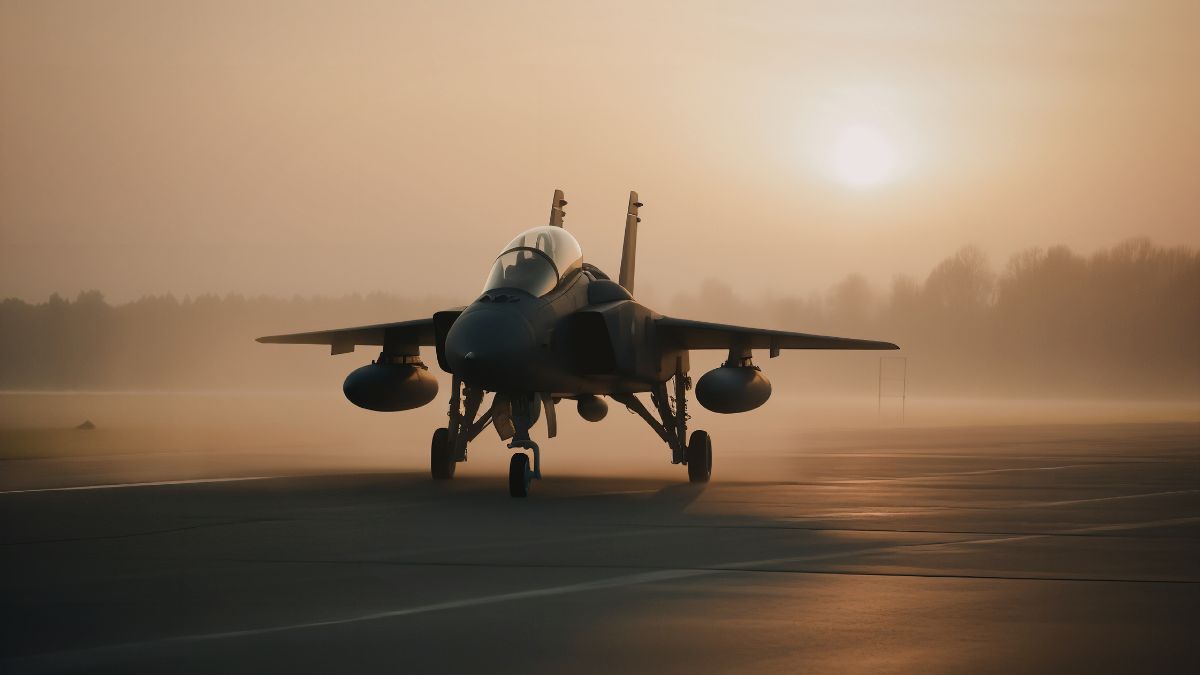
Spain has intensified its opposition to the ongoing Iran conflict by closing its airspace to U.S. military aircraft involved in the war, a move backed by strong political statements and legal arguments from senior government officials.
Official Confirmation and Key Statement
Spain’s Defence Minister, Margarita Robles, confirmed the decision publicly, making it clear that the restriction applies broadly to all war-related operations.
She stated:
“We don’t authorize either the use of military bases or the use of airspace for actions related to the war in Iran.”
This declaration highlights that Spain is not only closing its skies but also reinforcing a wider policy of non-participation in the conflict.
Extension of an Existing Policy
The airspace closure is not an isolated move. It follows earlier decisions by the government of Spain to deny U.S. forces access to jointly operated military bases such as Rota and Morón.
Authorities emphasized that the same reasoning applies: Spain will not support military actions it considers unlawful or unjustified.
This step effectively expands Spain’s restrictions, making it harder for U.S. military aircraft to operate across Southern Europe routes linked to the Middle East.
Strong Political Position From Leadership
Prime Minister Pedro Sánchez has been one of Europe’s most vocal critics of the war. He described the conflict as:
- “Illegal”
- “Reckless”
- “Unjust”
He also warned against escalating violence, stating that responding to illegality with further illegality could lead to broader global instability.
Spain’s Economy Minister, Carlos Cuerpo, reinforced this stance by explaining that the decision is rooted in international law and the country’s refusal to participate in what it considers a unilateral war.
Legal and Ethical Justification
The Spanish government has repeatedly argued that the U.S.-led military actions in Iran lack a clear legal mandate under international law.
Officials stress that Spain, as a sovereign nation and NATO member, has the right to refuse participation in operations that do not align with its legal and ethical framework.
This position aligns with Spain’s broader foreign policy approach, which prioritizes multilateralism and diplomatic solutions over unilateral military intervention.
Operational Impact on U.S. Military
The closure of Spanish airspace has immediate logistical consequences:
- U.S. military aircraft must reroute around Spain
- Flight times and operational costs may increase
- Coordination with other NATO allies becomes more complex
Despite the restrictions, exceptions may still apply in emergency situations, ensuring that critical or humanitarian flights are not affected.
Rising Diplomatic Tensions With the United States
The decision has significantly strained relations between Spain and the United States.
Former U.S. President Donald Trump has reportedly threatened trade retaliation against Spain in response to its refusal to cooperate militarily.
This dispute highlights a rare divide within NATO, as Spain takes a more independent stance compared to some other allies.
Broader European Context
Spain is not entirely alone in its cautious approach. Some European countries have also expressed reluctance to support the war directly, though Spain remains one of the most outspoken opponents.
Its position reflects wider concerns across Europe about:
- Escalation of the conflict
- Economic fallout (including rising oil prices)
- Risks of a prolonged regional war
Spain’s decision to close its airspace to U.S. military aircraft involved in the Iran war is part of a broader, consistent policy rejecting participation in the conflict. Backed by strong statements from leaders like Pedro Sánchez and Margarita Robles, the move underscores a commitment to international law and diplomatic resolution.