
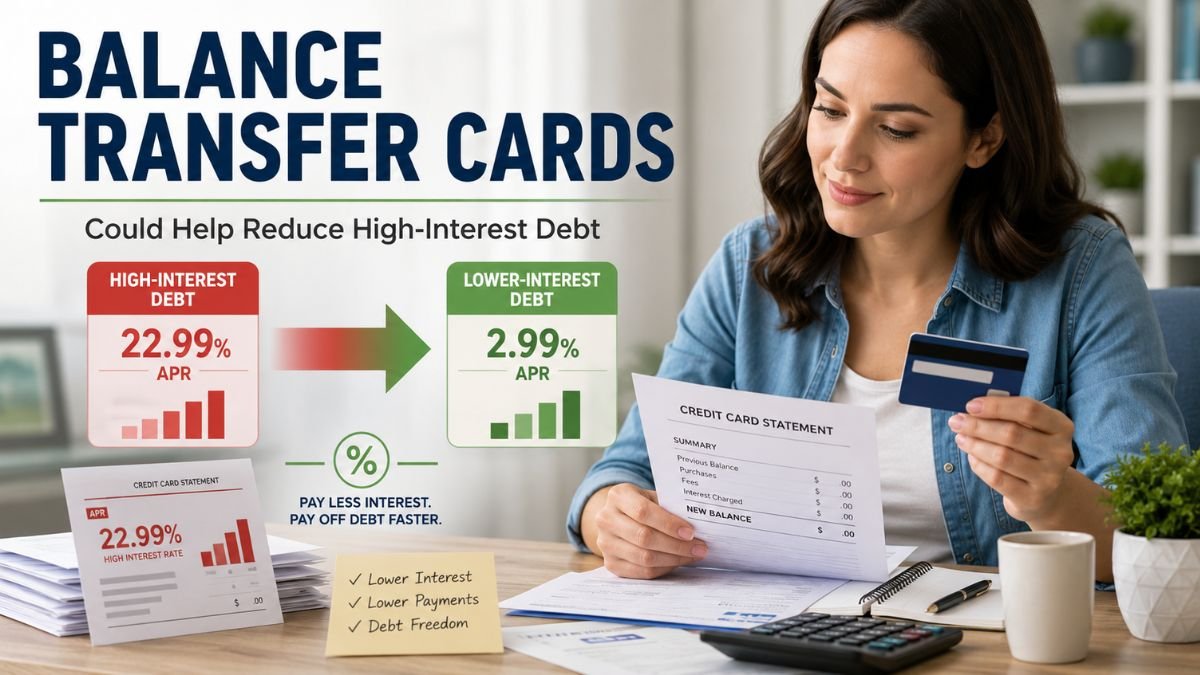
Balance transfer cards can be a useful option for people struggling with high-interest credit card debt. These cards allow borrowers to move an existing balance from one credit card to another, often with a lower introductory interest rate.
For many consumers, the biggest appeal is a promotional 0% APR period. During this time, more of each payment can go toward reducing the actual balance instead of covering interest charges.
That can make debt repayment feel more manageable, especially for people carrying balances on cards with high rates.
However, balance transfer cards are not a magic solution. They work best when borrowers have a clear repayment plan and avoid adding new debt while trying to pay off the transferred balance.
How Balance Transfer Cards Work
A balance transfer card lets a borrower move debt from one or more credit cards onto a new card. The new card may offer a low or 0% introductory APR for a limited time, such as several months or more than a year, depending on the offer.
Once the promotional period ends, the remaining balance usually starts collecting interest at the card’s regular APR. That is why timing matters. Borrowers who can pay off most or all of the balance before the promotional period expires may save money.
Most cards also charge a balance transfer fee. This fee is often a percentage of the amount transferred. Before applying, borrowers should compare the fee against the potential interest savings.
Why They Can Help With High-Interest Debt
High-interest debt can be difficult to pay down because interest charges keep adding to the balance. Even consistent monthly payments may not make a large impact if most of the money goes toward interest.
A balance transfer card can create breathing room. With a lower promotional rate, borrowers may be able to reduce the principal faster. This can shorten the repayment timeline and make the debt feel less overwhelming.
The strategy can be especially helpful for people with steady income, good credit, and a realistic budget. It is most effective when the borrower stops using the old card and focuses on paying down the transferred debt.
Risks Borrowers Should Watch Carefully
While balance transfer cards can help, they also come with risks. The biggest mistake is treating the transfer as new spending room. If a borrower moves a balance to a new card and then continues charging purchases on the old card, the debt problem can become worse.
Another risk is missing the promotional deadline. If the balance is still high when the regular APR begins, interest charges can return quickly.
Borrowers should also check whether new purchases on the balance transfer card will be charged interest. In some cases, new spending may not receive the same promotional terms as the transferred balance.
Who Should Consider A Balance Transfer Card?
A balance transfer card may be a strong choice for someone who has high-interest credit card debt, qualifies for a better offer, and can commit to a payoff schedule.
It may not be the right choice for someone who continues to overspend, has unstable income, or cannot qualify for enough credit to transfer the balance. In those cases, budgeting support, debt counseling, or other repayment options may be more useful.
Balance transfer cards can help reduce high-interest debt when used with discipline. They give borrowers a temporary window to pay down balances faster and potentially save on interest.
Still, the benefits depend on understanding the fees, promotional deadline, and regular APR. For the best results, borrowers should create a repayment plan before transferring debt and avoid taking on new balances.