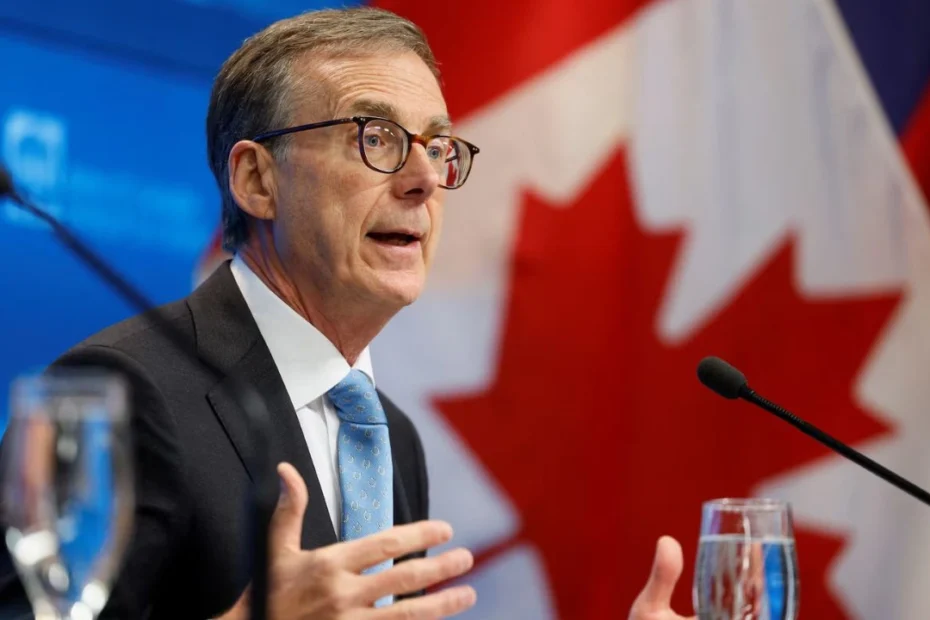
Former Bank of Canada governor says there is a 30% chance Canada could fall into a recession, raising concerns about the country’s economic outlook. This estimate highlights growing uncertainty driven by global and domestic pressures. While the probability does not guarantee a downturn, it signals a meaningful level of risk. Policymakers, businesses, and households are paying close attention to these warnings as they prepare for possible changes in economic conditions.
The statement that there is a 30% chance Canada could fall into a recession reflects a cautious assessment of current trends. Factors such as slowing global growth, high interest rates, and inflationary pressures contribute to this outlook. These elements can weaken consumer spending and business investment over time. As economic momentum slows, the likelihood of a recession increases, making it essential to monitor key indicators closely in the coming months.
Former Bank of Canada governor says there is a 30% chance Canada could fall into a recession due to tightening monetary policies. Interest rate hikes implemented to control inflation can reduce borrowing and spending. While necessary to stabilize prices, these measures often slow economic activity. The balance between controlling inflation and maintaining growth remains delicate, and missteps could increase the risk of an economic downturn.
Canada’s economy is also influenced by external factors, reinforcing the idea that there is a 30% chance Canada could fall into a recession. Global conflicts, supply chain disruptions, and changes in trade dynamics can affect exports and investment. As a trade-dependent nation, Canada is particularly sensitive to international developments. These external pressures can amplify domestic challenges, making the economic environment more unpredictable and complex.
The possibility that Canada could fall into a recession with a 30% probability has implications for households. Rising costs and economic uncertainty may lead consumers to reduce spending. This shift can slow economic growth further, creating a feedback loop that increases recession risk. Families may prioritize savings and essential expenses, adjusting their financial behavior in response to potential economic instability.
Businesses are also impacted by the warning that there is a 30% chance Canada could fall into a recession. Companies may delay expansion plans, reduce hiring, or cut costs to prepare for slower demand. These decisions can affect employment levels and overall economic activity. By taking a cautious approach, businesses aim to remain resilient, but widespread caution can contribute to reduced economic momentum.
Former Bank of Canada governor says there is a 30% chance Canada could fall into a recession, prompting policymakers to remain vigilant. Governments and central banks may consider measures to support growth if conditions worsen. Fiscal policies, targeted support programs, or adjustments in interest rates could be used to stabilize the economy. The goal is to mitigate risks while maintaining long-term economic stability and confidence.
In conclusion, former Bank of Canada governor says there is a 30% chance Canada could fall into a recession, emphasizing the importance of preparedness. While the risk is not certain, it highlights vulnerabilities in the current economic landscape. Monitoring key indicators and adopting proactive strategies can help reduce potential impacts. As uncertainty persists, both individuals and institutions must stay informed and adaptable to navigate potential challenges ahead.