
Iranian intelligence services may have played a role in recent attacks and threats in Canada, according to a top-secret government assessment obtained by Global News.
The report says it is a “realistic possibility” that Iran used local criminal networks to target Canada’s Jewish community. It also suggests that individuals possibly directed by Iranian intelligence may have been linked to threats involving Israeli, Iranian, and Jewish community interests in Canada.
Intelligence Report Warns of Possible Iranian-Linked Violence
The intelligence brief was prepared by the Integrated Threat Assessment Centre, known as ITAC, which evaluates threats to Canada’s national security.
The report was dated April 2 and was released to Global News through the Access to Information Act.
Although the document was partly redacted, it focused on violence in Canada connected to the Iran conflict. It did not publicly identify the specific violent incidents it was referencing.
Lone Actors Still Seen as Primary Threat
According to the assessment, the main violent extremist threat in Canada linked to the conflict remains a self-directed radicalized individual or small group with no direct connection to Iran.
However, the report also warns that Iran may be enabling criminal proxy actors to carry out violence against Jewish targets in Europe and possibly similar acts in Canada since the conflict began.
Possible Use of Criminal Proxy Networks
The report states that actors who may be directed by Iranian intelligence services are suspected of being involved in threats and suspicious activities targeting Israeli, Iranian, and Jewish community-linked individuals and interests in Canada.
This raises concerns that Iran may be relying on local criminal groups rather than directly carrying out operations itself.
Such a method can make attribution more difficult because the immediate attackers may be criminals hired through intermediaries.
New Group Claims Attacks in Europe
The intelligence report also refers to a newer organization called Harakat Ashab al-Yamin al-Islamiyya.
According to the document, the group has claimed responsibility for attacks in Europe, including an arson attack at a synagogue in London.
U.S. prosecutors have alleged that Harakat Ashab al-Yamin al-Islamiya is a front for Kata’ib Hizballah, a pro-Iran Shia militia based in Iraq.
U.S. Arrest Linked to Alleged European Attacks
In May, U.S. authorities arrested Mohammad Baqer Saad Dawood Al-Saadi, described as a Kata’ib Hizballah member.
He was accused of directing attacks in Europe.
According to the allegations, Al-Saadi claimed he was also behind two attacks in Toronto, including shootings at a synagogue and the U.S. consulate.
Toronto Police Investigating Criminal Network
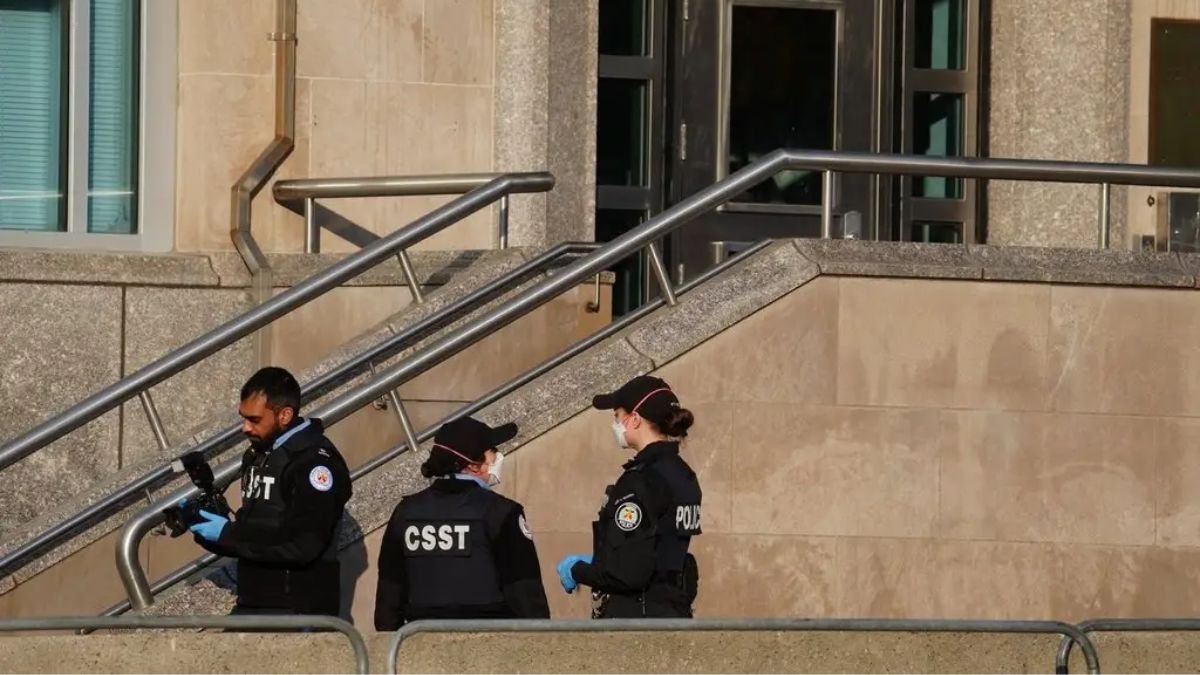
Toronto police have arrested several alleged gunmen believed to be connected to a crime network hired to shoot at the American consulate.
During the investigation, Toronto police officer Const. Marc Pinizzotto was shot and killed.
The broader investigation is examining more than two dozen shootings across Toronto.
Police said the gunmen were hired through encrypted messaging apps and were required to film the incidents in order to receive payment.
“Criminals for Hire,” Police Chief Says
Toronto Police Chief Myron Demkiw said investigators are seeing a repeated pattern in this case and in other unrelated incidents, including shootings at synagogues and Jewish schools.
He described the pattern as “criminals for hire.”
Police have said they are still investigating who ordered the shootings.
Ruby Sahota, Secretary of State for Combatting Crime, has blamed an unnamed “foreign entity,” though Canadian authorities have not publicly confirmed a direct link to Iran.
Intelligence Reports Raise Questions About Iran
While Canadian officials have not publicly tied the Toronto case to Iran, two intelligence reports released to Global News suggest Iranian intelligence may have had some role.
The reports mention continuing threats and suspicious activities aimed at targets connected to Israeli, Iranian, and Jewish communities in Canada.
They also state that some of the actors involved may be directed by Iranian intelligence services.
Iran’s History of Targeting Critics Abroad
Iran has long been accused of targeting opponents and critics in Western countries.
The report also comes after previous allegations that Iran plotted to assassinate critics in Canada, including former Justice Minister Irwin Cotler.
On June 10, Canada joined allied countries in condemning what they described as “lethal plotting” by Iran against Iranian dissidents and Jewish community members.
Canada and Allies Condemn Iranian Security Services
The joint statement blamed several Iranian state-linked organizations, including the Islamic Revolutionary Guard Corps Intelligence Organization, the Quds Force, and the Ministry of Intelligence and Security.
The statement said Iranian security services have a long-standing relationship with international and local criminal groups.
It also condemned attacks across Europe claimed by Harakat Ashab al-Yamin al-Islamiya and allegedly supported by intermediaries.
Canada Has No Plans to Restore Iran Relations
Last week, Foreign Minister Anita Anand said Canada does not plan to restore diplomatic relations with Iran.
Canada cut diplomatic ties with Iran in 2012.
Her comments came after Prime Minister Mark Carney said Canada was at a disadvantage because it does not have embassies in Iran and Venezuela.
The intelligence reports obtained by Global News raise serious concerns about the possible involvement of Iranian intelligence services in threats and attacks in Canada.
While Canadian officials have not publicly confirmed a direct Iranian link to recent shootings or violence, the reports say it is a realistic possibility that Iran has enabled criminal proxy actors to target Jewish, Israeli, and Iranian-linked communities.
With Toronto police investigating hired gunmen, encrypted messaging networks, and more than two dozen shootings, the case highlights growing concern over foreign interference, criminal proxies, and security threats affecting communities in Canada.