
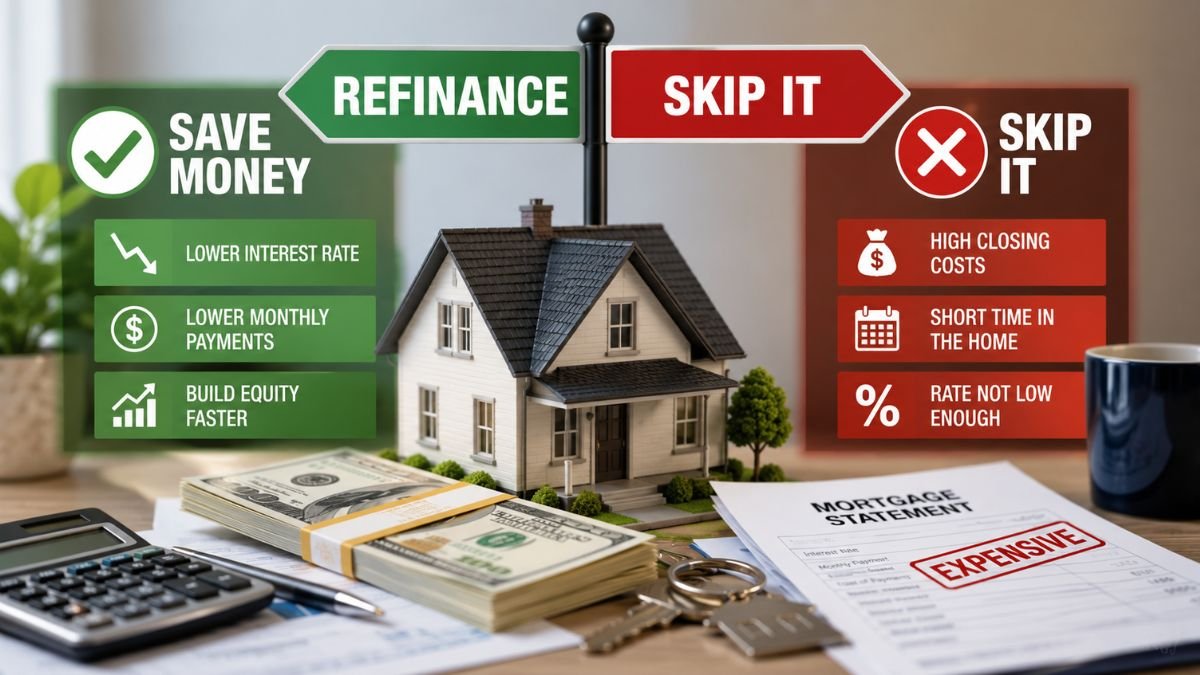
Mortgage refinancing can be a smart financial move, but it is not always the right choice. Refinancing means replacing your current home loan with a new mortgage, usually with a different interest rate, loan term or monthly payment.
Homeowners often refinance to lower their monthly payments, reduce total interest, switch loan types or access home equity.
However, refinancing usually comes with closing costs, paperwork and a new repayment timeline. That is why the real question is not simply whether you can refinance, but whether it is worth it.
When A Lower Interest Rate Makes Sense
The most common reason to refinance is to get a lower interest rate. A lower rate can reduce your monthly payment and may save thousands of dollars over the life of the loan.
Refinancing is usually more attractive when your new rate is meaningfully lower than your current rate. Even a small rate reduction can help on a large mortgage, but the savings must be compared with closing costs.
For example, if refinancing saves you $250 per month but costs $5,000 upfront, it would take about 20 months to break even. If you plan to stay in the home longer than that, refinancing may make sense.
Understanding The Break-Even Point
The break-even point is one of the most important calculations in refinancing. It tells you how long it will take for your monthly savings to recover the cost of refinancing.
The formula is simple: divide total closing costs by monthly savings.
If your refinance costs $6,000 and saves $300 per month, your break-even point is 20 months. If you expect to stay in the home for five more years, that could be worthwhile. But if you plan to move in one year, refinancing may cost more than it saves.
When Shortening The Loan Term Helps
Some homeowners refinance from a 30-year mortgage into a 15-year or 20-year loan. This can help pay off the home faster and reduce total interest.
The tradeoff is that monthly payments may increase. This option works best for borrowers with stable income, strong cash flow and a goal of becoming debt-free sooner.
A shorter term can be powerful, but it should not leave you struggling to cover other expenses or emergency savings.
When Switching Loan Types Makes Sense
Refinancing may also be useful if you want to switch from an adjustable-rate mortgage to a fixed-rate mortgage. This can provide more predictable payments and protect you if rates rise in the future.
Some borrowers also refinance to remove mortgage insurance, especially if their home value has increased and they now have enough equity.
In these cases, the benefit is not only a lower rate. It may also be long-term stability and lower ongoing costs.
When Cash-Out Refinancing May Help
A cash-out refinance allows homeowners to borrow against home equity and receive cash at closing. This money may be used for home improvements, debt consolidation or major expenses.
However, this option should be used carefully. It increases your mortgage balance and may extend the time it takes to pay off your home. Using home equity for short-term spending can create long-term risk.
When Refinancing Is Not Worth It
Refinancing may not make sense if closing costs are too high, your credit score has dropped, you plan to move soon or the new loan restarts your mortgage in a way that increases total interest.
A lower monthly payment can look attractive, but if it adds many years to the loan, you may pay more overall.
Mortgage refinancing is worth it when the savings, stability or loan improvements clearly outweigh the costs. The best time to refinance is usually when you can secure a better rate, recover closing costs before moving and improve your long-term financial position.
Before refinancing, compare lenders, calculate your break-even point and look beyond the monthly payment. A good refinance should not just feel cheaper today. It should make your mortgage stronger for the future.