
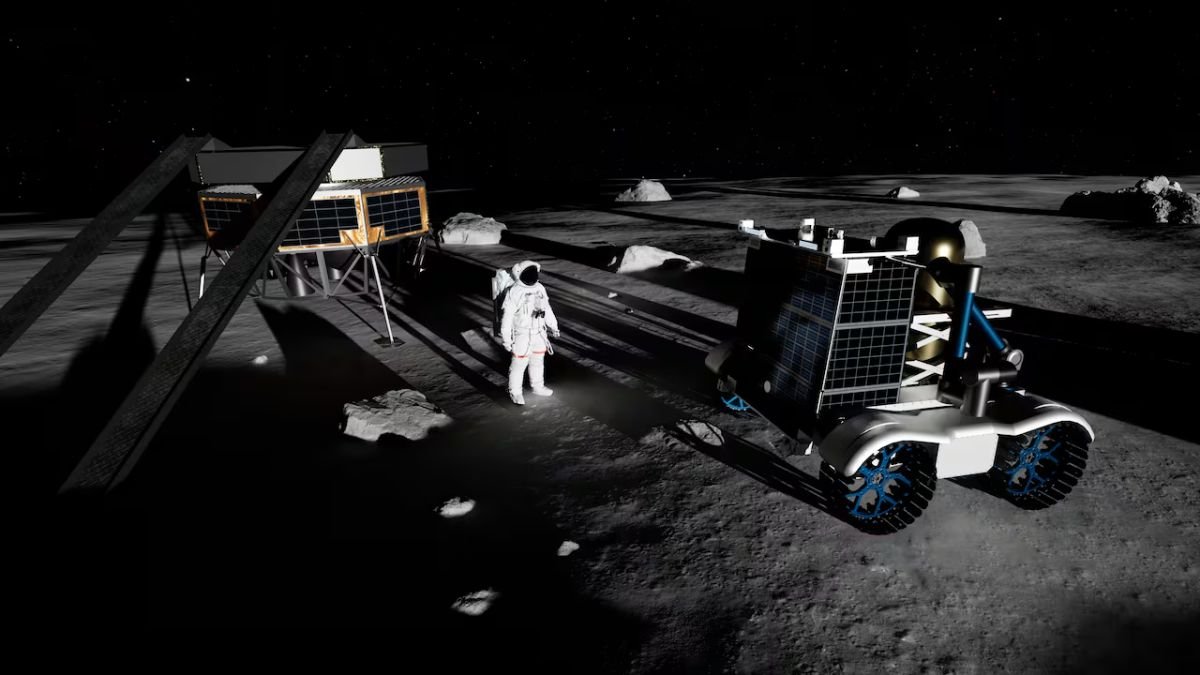
Canada is preparing to take on a larger role in the next era of lunar exploration. In April, Canadians watched Canadian Space Agency astronaut Jeremy Hansen travel farther than any human before as part of the Artemis II mission, which carried him and three NASA astronauts around the moon.
The mission was presented as an important step toward returning humans to the lunar surface. NASA says that return is planned for 2028 through the Artemis IV mission.
Artemis Is Different From Apollo
NASA’s Artemis program is not simply a repeat of the Apollo missions from the 1960s and 1970s.
Unlike Apollo, Artemis is an international effort. At present, 68 countries have signed the Artemis Accords.
The goal is also much larger than a short visit. Artemis is designed to help humans establish a lasting presence on the moon.
To make that possible, space agencies and private companies will need major infrastructure, including vehicles, construction support, surveillance cameras and reliable power systems.
Canada’s Growing Lunar Role
Canada is expected to contribute in several important areas.
Canadian companies are already working on technology that could support long-term lunar operations. In some cases, Canadian-built systems are already on the moon.
From rovers and cameras to robotics and nuclear power concepts, Canada is positioning itself as a key partner in the future of moon exploration.
Lunar Utility Vehicle Planned for 2033 or Later
Although a small lunar rover project was cancelled by the Canadian Space Agency in March, a larger lunar utility vehicle remains in development.
That vehicle is currently planned for no earlier than 2033.
Three Canadian companies are working on designs and competing for the final contract:
- MDA Space
- Canadensys Aerospace
- Mission Control
The vehicle would help transport people and equipment across the lunar surface and support construction work.
NASA Shifts Toward Moon Base
Earlier this year, NASA administrator Jared Isaacman changed the direction of the Artemis program by cancelling the Lunar Gateway space station.
Instead, NASA announced a new concept called Moon Base, which would be built near the lunar south pole.
The base is intended to support both work and living on the moon.
Construction is expected to happen in three phases, beginning now, with NASA partnering with several commercial companies for lunar rovers and landers.
Canadensys May Adjust Rover Plans
Christian Sallaberger, president and CEO of Canadensys, said the new timeline could require changes to Canada’s lunar utility vehicle plans.
He said the company is working with the Canadian Space Agency to explore ways to move the program forward faster, possibly at a lower cost.
Current designs would make the vehicle roughly the size of a pickup truck.
However, Sallaberger said Canada could also consider sending a smaller vehicle sooner.
Canadian Cameras Already on the Moon
Canadensys already has experience building lunar technology.
Sallaberger said the company has designed and built 17 systems that are currently on the moon through different international missions.
The company has provided cameras for several missions, including Firefly Aerospace’s Blue Ghost lunar lander, which touched down on the moon in March 2025.
Canada Known as a Space Robotics Powerhouse
Michele Faragalli, chief technology officer at Mission Control, said Canada is well positioned to play a major role in lunar operations.
He noted that Canada has been involved in NASA and international space exploration efforts for nearly half a century.
That long history has helped create Canadian space technology, companies and jobs.
Faragalli said Canada is recognized globally as a leader in space robotics.
Power Will Be Essential for a Moon Base
One of the biggest challenges for a permanent lunar base is power.
The Canadian Strategic Missions Corporation, known as CSMC, is working on that problem.
Last year, the Canadian Space Agency awarded the company $1 million to develop a low-enriched uranium nuclear reactor for possible use on the moon.
Nuclear Power Could Support Long-Term Lunar Operations
Daniel Sax, founder and CEO of CSMC, said nuclear power will be necessary for sustained Artemis operations.
He said long-term lunar activity requires a reliable energy source, and nuclear power is the only option that can support extended operations on the moon.
The technology may also have uses on Earth.
Sax said if a reactor can be small enough to fit on a lunar lander and safe enough to operate remotely on the moon, similar systems could potentially be used in remote regions such as the Arctic.
More Opportunities for Canadian Technology
Canada may also contribute to future moon projects through mining, robotics and other advanced technologies.
CSMC is exploring lunar mining opportunities, while MDA Space, the company behind the Canadarm, is already known for world-class space robotics.
Sax said Canada has an important opportunity to act now, especially following Jeremy Hansen’s historic Artemis II mission.
Canada is becoming an important player in the future of lunar exploration. With Canadian companies developing rovers, cameras, robotics, mining concepts and nuclear power systems, the country is helping support the shift from short moon visits to long-term lunar living.
As NASA moves toward its Moon Base vision, Canada has a strong opportunity to expand its role in space technology and contribute meaningfully to the next chapter of human exploration.