
The Alberta government has presented a proposed route and potential builders for a new oil pipeline to the British Columbia coast, only hours after Prime Minister Mark Carney announced an agreement with B.C. aimed at making the project possible.
Speaking in Calgary on Thursday evening, Carney and Alberta Premier Danielle Smith confirmed that Alberta had formally submitted a pipeline route to the federal major projects office.
Alberta Says Pipeline Could Create Major Economic Benefits
Premier Smith said the proposed pipeline could generate billions of dollars in revenue for both provincial and federal governments over the coming decades.
She also said the project could create major wealth opportunities for Indigenous communities that choose to partner in it.
Smith described the project as transformational, arguing that both Alberta and Canada cannot afford to leave such an opportunity unrealized.
Proposed Route From Bruderheim to Delta
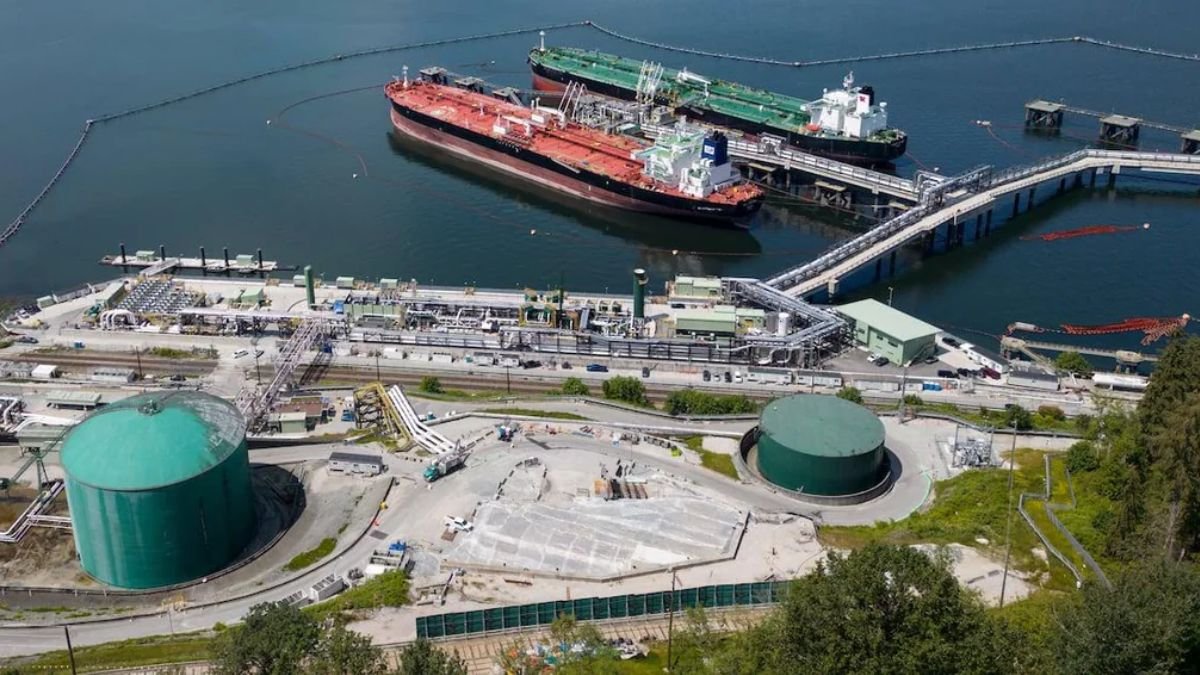
The proposed pipeline would begin in Bruderheim, a town northeast of Edmonton, and run to a terminal in Delta, British Columbia, south of Vancouver.
The route would generally follow the existing Trans Mountain pipeline corridor.
Once complete, the pipeline would be designed to move more than one million barrels per day to tankers, which would then carry the oil to Asian markets.
Project Cost Estimated Between $35.2 Billion and $43.7 Billion
The estimated cost of the project ranges from $35.2 billion to $43.7 billion, including contingency costs.
The Alberta government said it has already spent $18.3 million on planning work for the proposed pipeline.
The province wants the major projects office to designate the pipeline as a project of national interest by October 1.
Trans Mountain and Pembina Named as Partners
Smith said Alberta is working with federally owned Trans Mountain Corporation and Calgary-based Pembina Pipeline to develop the project.
However, Alberta’s submission notes that the final ownership structure has not yet been confirmed.
Trans Mountain Corporation said the initial partnership would place Ottawa and Alberta as the majority interest holders.
Trans Mountain’s Role in the Project
Mark Maki, chief executive officer of Trans Mountain, told The Canadian Press that he could not say what percentage the Crown corporation would control.
However, he said Trans Mountain’s role would mainly involve development, project management and eventual operation of the pipeline.
Pembina’s Interest Could Increase After Operations Begin
Pembina said its current interest in the project is 10 per cent.
The company added that its stake could rise to 20 per cent once the pipeline becomes operational.
Pembina also said the goal is to sign final agreements by September.
Environmental Group Criticizes Public-Private Partnership
The environmental organization Climate Action Network criticized the proposal and Smith’s description of the project as an initial public-private partnership.
The group argued that the arrangement sounds like Canadians may end up signing a “blank cheque.”
Smith said she believes a full or larger private-sector takeover of the project could happen later.
Indigenous Ownership and Consultation
Smith and Carney said the project may include opportunities for Indigenous ownership, with more details expected later.
The submission package says the proposed route could cross the traditional territories of as many as 125 Indigenous communities.
It also says Alberta consulted some First Nations before Thursday’s announcement. However, the document notes that many were consulted while Alberta was still considering a route to the northern coast, rather than the southern B.C. route now being proposed.
Carney said consultation with First Nations on the new route would begin immediately.
Ottawa and British Columbia Reach Pipeline Deal
Alberta’s submission followed a broad agreement between Ottawa and B.C. Premier David Eby, who had been a strong critic of Smith’s pipeline proposal since last fall.
The deal includes Ottawa’s commitment to uphold the tanker ban on B.C.’s north coast.
It also includes a promise that Ottawa would take on financial risks related to potential environmental problems and spills if the pipeline is approved.
In addition, B.C. would receive financial compensation through an annual royalty payment for allowing the pipeline to pass through the province.
B.C. Says It Does Not Seek the Project
Carney’s office said the agreement appeared to ease some of Eby’s earlier opposition.
According to an online statement from Carney’s office, British Columbia acknowledges Canada’s agreement with Alberta on a new trans-provincial pipeline. The project depends on construction of the Pathways Carbon Capture and Sequestration project and the duty to consult First Nations.
The statement also said that although B.C. does not seek the pipeline, it recognizes its constitutional responsibilities and will act in good faith on routing and permitting discussions within its jurisdiction, as long as reciprocal commitments are met.
B.C. Will Not Fight Pipeline in Court
Eby said the agreement does not require him to support the project.
However, he said British Columbia would not challenge the pipeline in court.
Eby said the agreement matters because it protects the northern tanker ban and ensures British Columbians would be fairly compensated for taking on environmental risks if the pipeline goes ahead.
Roberts Bank Terminal Upgrades Included in Deal
Another part of the B.C. agreement involves Ottawa committing $10 billion for infrastructure upgrades at the Roberts Bank Terminal in Delta.
Carney said the upgrades could create $100 billion in trade capacity and add $3 billion annually to Canada’s economy.
Alberta’s submission says the terminal would need to be designed for large oil tankers and include two new loading berths.
Pathways Carbon Capture Project Tied to Pipeline Progress
Smith and Carney also announced that they are close to finalizing an agreement with the Oil Sands Alliance on the Pathways carbon capture project.
The earlier energy deal between Carney and Smith made Alberta’s pipeline proposal conditional on progress on the carbon capture project.
Pierre Poilievre Criticizes Tanker Ban
In Camrose, Alberta, federal Conservative Leader Pierre Poilievre criticized Carney for keeping the oil tanker ban in place, calling the policy “ridiculous.”
Poilievre said Canada should diversify its export options and added that he is not opposed to another pipeline to southern British Columbia.
He argued that Carney should provide the permit, allow the private sector to build the project and step aside so it can move forward.
Alberta and Federal NDP Split Over Announcement
The announcement also exposed tensions between the Alberta NDP and the federal NDP.
Alberta NDP Leader Naheed Nenshi welcomed the news in a written statement.
Nenshi said Alberta was pleased to see the southern route submitted to the major projects office and to see progress on the Pathways carbon capture project.
He called the carbon capture project an important step toward future-proofing oil sands production.
However, newly elected federal NDP Leader Avi Lewis condemned the proposal.
Lewis said the announcement shows that the federal government is prioritizing the profits of Big Oil. He also criticized the public-private partnership as unclear, arguing that the public could be left carrying the risks, damages and most of the costs.