
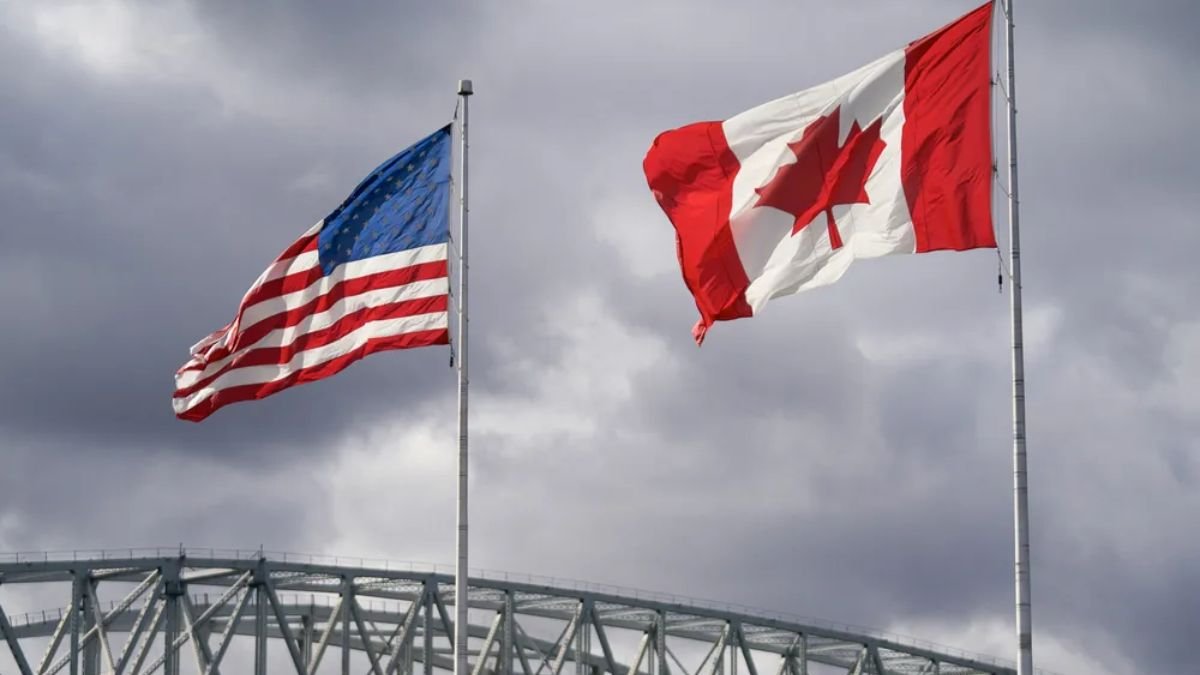
As the United States moves toward its 250th anniversary, the country appears more divided than celebratory. According to Gallup, national pride has fallen to about 40%, reaching a historic low. This decline is especially visible among younger and more educated Americans.
While patriotism remains stronger in some parts of the country, the political divide has become much wider than it was during earlier national milestones. In 1976, during America’s bicentennial, there was far less difference between Republicans and Democrats on national pride. Today, that gap has grown sharply, with Democrats generally showing less pride in the country than Republicans.
Muted Celebrations in Some U.S. Regions
The level of celebration depends heavily on location. In deeply Democratic states such as California and New York, patriotic celebrations appear more restrained. Even the traditional Fourth of July fireworks display in Long Beach, California, has reportedly been cancelled.
Hollywood, which is largely dominated by left-leaning cultural voices, is also unlikely to give the anniversary a strongly celebratory treatment.
This may please some Canadians, especially those whose national identity is partly shaped by opposition to America. However, despite the drop in U.S. patriotism, Americans remain more patriotic than Canadians and many Europeans.
Education and the Decline of Western Patriotism
One major reason for the decline in patriotism is the way history is taught in many Western education systems. Schools and universities increasingly focus on the wrongdoing of Western nations.
In academic circles, history is often framed through a settler-colonial perspective that presents former colonies and colonial powers as fundamentally illegitimate.
This mindset has strongly influenced wider culture. In Canada, claims about unmarked graves of First Nations children at former residential school sites have been widely questioned, yet much of the media continues to treat the issue as central to the national story.
Instead of emphasizing Canada’s achievement in providing opportunity to millions of immigrants, this newer outlook presents Canada, the United States and the United Kingdom as morally flawed or even illegitimate countries.
Cultural Elites and Anti-Western Narratives
This way of thinking is common among cultural elites in both Canada and the United States. Some celebrities, including Billie Eilish, have repeated slogans such as “no one is illegal on stolen land.”
However, critics argue that such statements often come without personal sacrifice from those making them. For example, few wealthy public figures appear ready to return their property to the descendants of the original Indigenous inhabitants of the land.
There is no doubt that every country has dark chapters in its past. The United States must acknowledge slavery in the South and its harsh treatment of Indigenous peoples. Canada must also recognize its own history of repression toward First Nations communities.
But acknowledging past injustice does not mean a country cannot still take pride in its achievements.
Why National Pride Still Matters
National pride remains important, especially as Canada and the United States become increasingly shaped by immigrants from non-Western countries.
A shared national identity helps bring people together. Unless one believes in a global socialist commonwealth without strong national borders or traditions, identity depends on a common past that citizens can respect and honour.
When intellectuals, artists and institutions constantly attack Western civilization, it can have a harmful effect on newcomers from authoritarian societies.
Manhattan Institute scholar Reihan Salam has argued that Muslim immigrants may not arrive in the West with strong anti-Western views, but their children may develop hostility after exposure to current academic and media narratives.
This trend can be seen in antisemitic rallies, especially in Canada, and in the rise of young, educated, affluent cosmopolitan figures such as Hasan Piker and Zohran Mamdani.
America and Canada: Different Historical Paths
America’s 250th anniversary is also a useful moment to reflect on the fundamental differences between the United States and Canada.
The United States was born as a revolutionary country. Its fight against monarchy inspired democratic movements around the world. Some Canadians were also influenced by what historian R.R. Palmer described as the age of democratic revolution.
Canada, however, rejected the American revolutionary model. British authorities opposed democratic radicalism, and Quebec’s Catholic seigneurs had little interest in revolutionary ideas, especially those associated with anti-Catholic New England Protestants.
The United States invaded Canada twice, first in 1775-76 and later during the War of 1812, expecting support from locals. Instead, it often faced indifference or outright hostility.
Economic Rivalry Between the U.S. and Canada
The conflict between the two countries later moved from military competition to economic rivalry.
Historian William Appleman Williams, in The Roots of the Modern American Empire, argued that the United States and Canada spent much of the 19th century competing over European markets and control of important waterways such as the Great Lakes and the Columbia River.
By the 20th century, however, many of these disputes had been resolved. As Canada became more independent from Britain, it became easier for both countries to cooperate as separate nations with shared values of democracy and law.
This partnership became especially important during the two World Wars, when Canada and the United States became close allies.
Why the U.S. and Canada Still Need Each Other
Today, after the Cold War and amid weaker American ties to Europe, Canada and the United States appear to be drifting apart. That separation does not benefit either country.
For the United States, alienating Canada would mean losing a vital strategic partner. For Canada, the United States remains by far its largest trading partner.
The personal ties between both countries are also deep. Around 800,000 Canadians live in the United States, while more than 1 million Americans live in Canada.
Geography also makes close alignment difficult to avoid. British efforts to pull Canada’s economy away from the United States were once described by progressive historians Charles and Mary Beard as being like trying to make “water go uphill.”
Canada’s Alternatives to America Are Limited
Some Canadian nationalists may dream of reducing dependence on the United States. But distancing Canada from the American economy is unlikely to solve the country’s economic struggles.
Despite America’s problems, Americans remain more optimistic about the future than Canadians.
Canada’s alternatives are not especially attractive. It could become more dependent on China, risking the role of a resource supplier for the Chinese Communist Party. Or it could align more closely with Europe, as Prime Minister Mark Carney appears to prefer.
However, critics argue that Europe’s green-focused, anti-growth model has produced weaker productivity, slower economic growth, lower investment and declining wealth per person.
Trump, Polarization and America’s Future
The United States is not at its best under Donald Trump, but claims that America is becoming a fascist state are overstated.
Trump’s time in office is limited by law, and his control over the Republican Party appears to be weakening. Anti-Trump voices remain powerful in the media, academia and cultural industries.
The country is deeply polarized, but Canada should not take pleasure in America’s division. The same ideology that weakens American self-confidence also affects Canada.
Canada Also Needs a Shared National Story
As common national narratives are broken down, Canada may face even greater risks than the United States. Quebec has long felt politically and culturally alienated, and Alberta is increasingly frustrated as well.
Every country needs an inspiring national story to hold people together. Without a shared identity, regional divisions become harder to manage.
For Canada, dismissing its own history as illegitimate could weaken national unity at a time when the country already faces internal strains.