
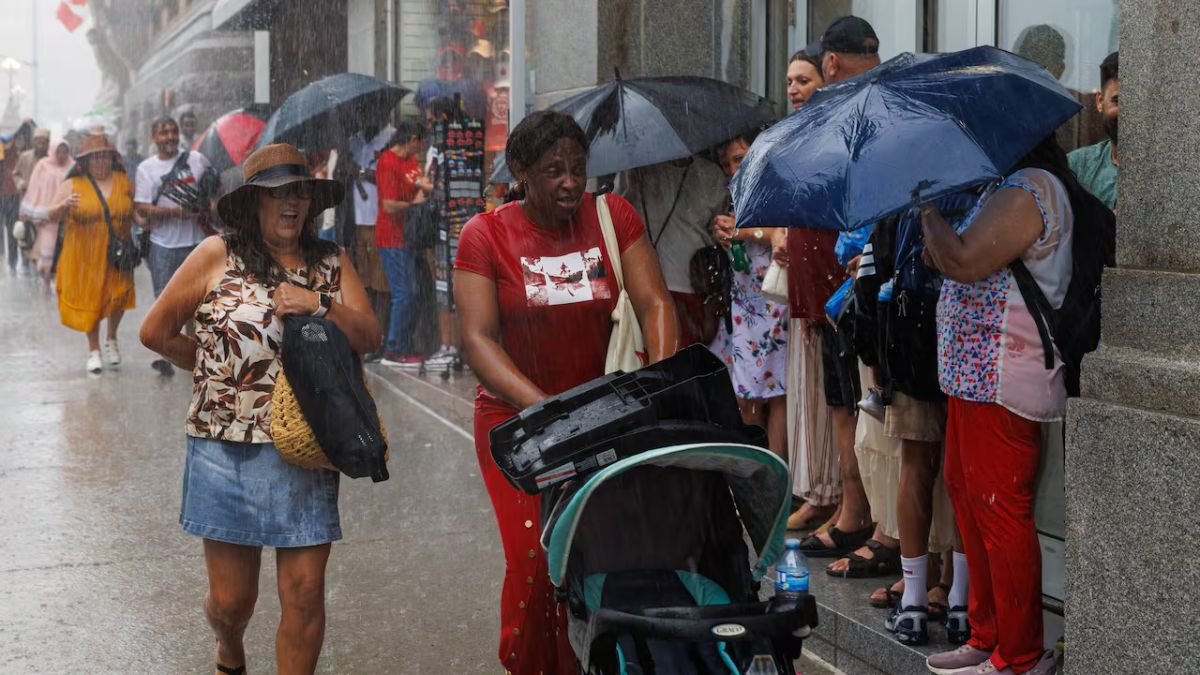
Across Canada this summer, many communities are dealing with different forms of severe weather. From flooding and storms in the West to heat waves, thunderstorm alerts and wildfires in other regions, extreme weather has become a major concern for Canadians.
Western Canada has experienced intense storms and serious flooding, especially in Manitoba. Parts of Ontario, Quebec and British Columbia have faced heat waves and thunderstorm watches, while northern regions have been affected by wildfires.
Environment and Climate Change Canada meteorologist Jennifer Smith, based in Ottawa, described the season simply: Canada has seen a lot of wild weather.
Severe Storms, Flooding and Heat Across Canada
Recent weather events have caused damage and disruption in several provinces.
In southwest Winnipeg, a powerful storm damaged a home, knocked down fences and tossed barbecues across yards. In Kingston, Ontario, a tornado warning was briefly issued on Tuesday. Meanwhile, Canada Day celebrations in Ottawa were cancelled because of thunderstorms and flooding.
These events have raised questions about why so many parts of the country are experiencing extreme conditions at the same time.
Is El Niño Responsible for Canada’s Wild Summer Weather?
Many climate observers have predicted an unusually strong El Niño this year, with the pattern expected to peak during winter.
However, experts say it is still too early to blame this summer’s weather entirely on El Niño.
Barrie Bonsal, a research scientist with Environment and Climate Change Canada in Saskatoon, said Canada’s climate is naturally highly variable. Because the country is so large, it is common for one region to be hot, another to be cold, another to be wet and another to be dry.
El Niño conditions were only officially declared on June 11 by the U.S. Climate Prediction Center, meaning the pattern is still developing.
How the Jet Stream Can Influence Extreme Weather
One important factor behind Canada’s weather may be the jet stream.
The jet stream is a fast-moving current of air high in the atmosphere that travels from west to east. It separates colder northern air from warmer southern air.
When the jet stream becomes stuck in one position, it can create very different weather conditions in different regions. Some areas may experience heat waves and drought, while others may face storms, flooding or cooler weather.
Experts say this type of stalled pattern may be contributing to the current mix of extreme weather across Canada.
Transition From La Niña to El Niño May Add Instability
Canada is also moving from several cooler La Niña years into a stronger El Niño pattern.
Doug Gillham, senior meteorologist at The Weather Network, said the atmosphere does not usually shift smoothly from one major climate pattern to another.
He said spring is often unpredictable, but this year’s weather has been even more unsettled than usual, and that instability has continued into summer.
Although El Niño usually has a stronger impact on Canada during winter, the transition itself may be helping fuel unusual weather patterns.
What a Strong El Niño Could Mean
Some forecasters are predicting a possible “super” El Niño.
A powerful El Niño can worsen extreme weather worldwide, causing some areas to shift sharply between drought and heavy rainfall.
In Canada, El Niño is more commonly associated with milder winters. It can also reduce hurricane activity in the Atlantic region.
However, experts warn that weather outcomes can vary, and Canada’s regional impacts may not be the same everywhere.
What Western Canada Can Expect
For the rest of the summer, experts say Western Canada is likely to remain warmer overall.
Southern parts of the West may also become much drier.
Gillham said the Prairies may see dry periods, but widespread drought is not expected there. However, drought remains a concern in parts of British Columbia.
Forecast for Eastern Canada and the Maritimes
From the Great Lakes to the Maritimes, temperatures are expected to ease slightly compared with the current heat wave conditions.
Still, that does not mean the rest of the summer will be calm or storm-free.
Gillham said the weather roller coaster may slow down, but it is not expected to stop completely.
Winter Outlook and El Niño Effects
As winter approaches, El Niño typically brings wetter conditions to the southern United States.
Bonsal said there is a small possibility that some of that moisture could move north into the southern Prairies, but he described that outcome as unlikely.
He warned that people should not depend too heavily on that possibility.
How Canadians Can Prepare for Extreme Weather
Experts say staying informed is one of the most important ways to stay safe during extreme weather.
During periods of extreme heat, people should drink enough water, seek cooler indoor spaces and check on vulnerable individuals, including seniors, children and people with health conditions.
When thunderstorms are nearby, Smith advised people to go indoors immediately. She repeated the common safety message: when thunder is heard, it is time to move inside.
Bonsal also said past weather history can help people prepare, but Canadians should also expect that future events may become warmer and more intense.
Climate Change and Canada’s Extreme Weather
Experts say there is no simple direct link between global warming and El Niño, which is a natural climate pattern.
However, Bonsal said climate change may make El Niño events stronger when they occur. He compared warming the atmosphere to disturbing natural systems in a way that can increase instability.
Smith said climate change is likely playing a major role in Canada’s summer weather. She noted that Canada is warming at about twice the global average, while the Arctic is warming close to four times faster.
This warming raises the baseline for extreme heat and can contribute to more erratic rainfall patterns across the country.
Weather Patterns Have Many Causes
Gillham cautioned against blaming extreme weather on a single factor.
He compared weather analysis to understanding why a hockey team wins or loses. Many players and conditions influence the final result.
In the same way, Canada’s current weather is shaped by several factors, including the jet stream, El Niño, regional patterns, natural variability and climate change.